

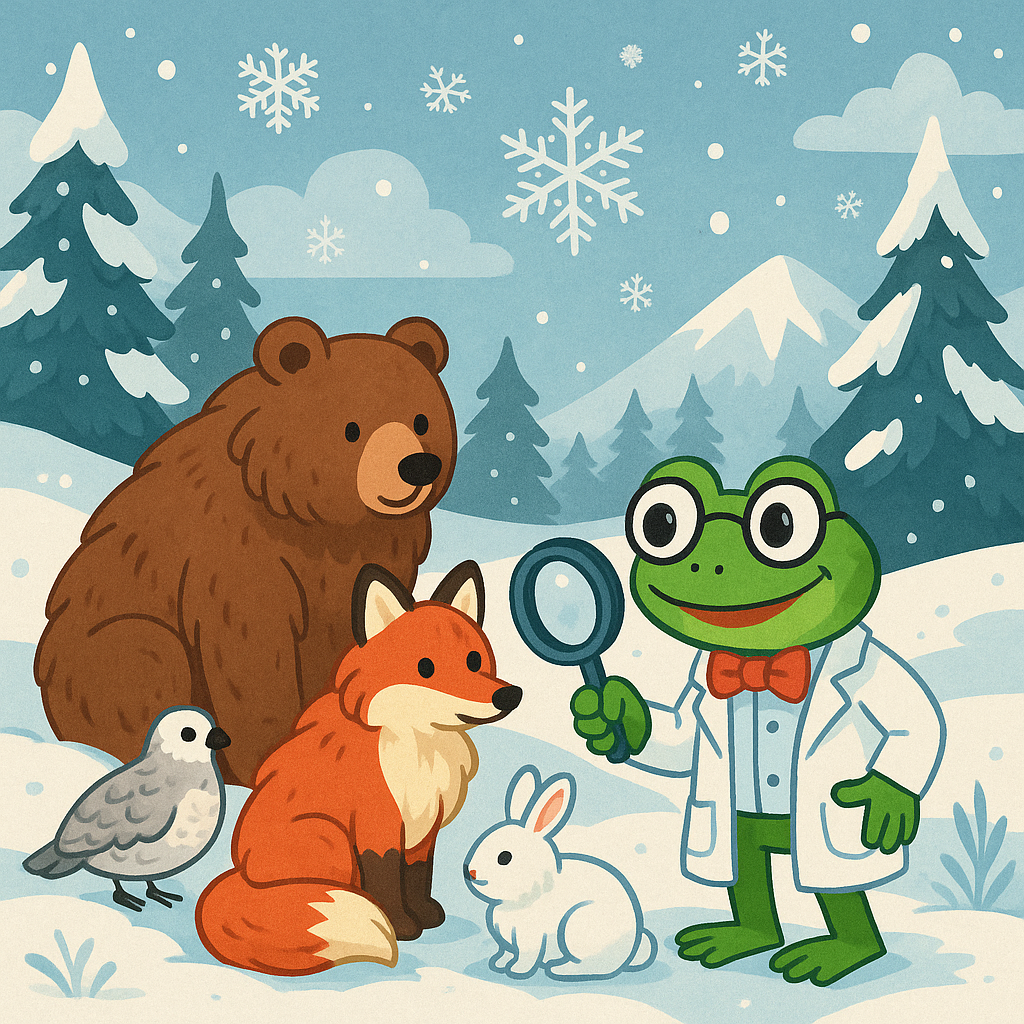
By Professor Bubbles — your frog scientist who bundles up with science! 🐸🧣
🌬️ Winter Is Cold… But Animals Are Clever
When winter arrives, temperatures drop, snow falls, and icy winds blow.
But animals don’t get jackets or scarves like we do — so how do they stay warm?
Turns out, animals use amazing biological tricks to survive the cold.
From extra-thick fur to clever body heat systems, nature has built-in winter gear!
Let’s explore their secret survival tools with Professor Bubbles!
🧥 1. Winter Coats: Growing Thicker Fur
Many mammals grow a thick winter coat when temperatures fall.
The fur traps warm air close to the skin — just like a fluffy blanket.
Examples:
- Foxes grow warm, soft underfur
- Wolves develop double-layered coats
- Rabbits become extra fluffy in winter
Some animals even change color, turning white to blend into snowy landscapes.
“Imagine wearing a giant fluffy sleeping bag — that’s a winter coat!”
— Professor Bubbles 🐸🧤
🐧 2. Fat Layers: Built-In Insulation
Just like seals and whales, some animals bulk up before winter.
This extra layer of fat:
- Stores energy
- Keeps body heat inside
- Acts like a natural wetsuit
Polar bears, for example, have both thick fur and a powerful fat layer.
🐦 3. Fluffing Feathers: Birds Stay Toasty Too
Birds don’t wear sweaters — they fluff their feathers!
By puffing them up, they trap air between the layers, making a warm insulation pocket.
Some birds even tuck one leg into their body or hide their beaks under their wings to conserve heat.
🐭 4. Huddling: Warmth Through Teamwork
Sometimes the best heater is… a friend!
Animals stay warm by snuggling together:
- Mice huddle in nests
- Penguins form giant “warm circles”
- Bees cluster around their queen, vibrating to create heat
Teamwork = warmth!
🦡 5. Underground Homes and Cozy Dens
Many animals stay warm by building:
- Burrows
- Dens
- Tree hollows
- Snow tunnels
These spaces block the wind and trap body heat.
Badgers, chipmunks, rabbits, and even foxes relax in warm underground homes while the world above freezes.
🐸 6. Slowing Down: Saving Energy
Cold weather means less food, so some animals slow their bodies to conserve energy.
There are two forms:
💤 Torpor
Short, daily “mini-hibernation” (like hummingbirds).
🦔 Hibernation
A long winter sleep where temperature and heartbeat drop dramatically.
Bears, hedgehogs, and some bats use this trick.
“Hibernation is like turning your energy dial down to ‘Cozy Mode’.”
— Professor Bubbles
🧪 Try This Winter Science Activity: Insulation Experiment
Materials:
- Two cups
- Ice water
- Cotton balls, wool, or bubble wrap
- Thermometer (optional)
Steps:
- Fill both cups with ice water
- Wrap one cup in cotton or bubble wrap (insulator)
- Leave the other cup plain
- Check which one stays warmer longer
This shows how fur and feathers help animals stay warm!
🧠 Fun Winter Facts
❄️ Arctic foxes have fur on their feet — built-in snow boots!
❄️ Penguins’ feathers are waterproof AND airtight.
❄️ Owls have special “silent feathers” to hunt even in snowy weather.
❄️ Polar bears have black skin under their white fur to absorb heat.
📚 Science Vocabulary
| Word | Meaning |
|---|---|
| Insulation | Material that keeps warmth from escaping. |
| Hibernation | Deep winter sleep to save energy. |
| Torpor | Short, daily energy-saving sleep. |
| Adaptation | A physical feature or behavior that helps an animal survive. |