

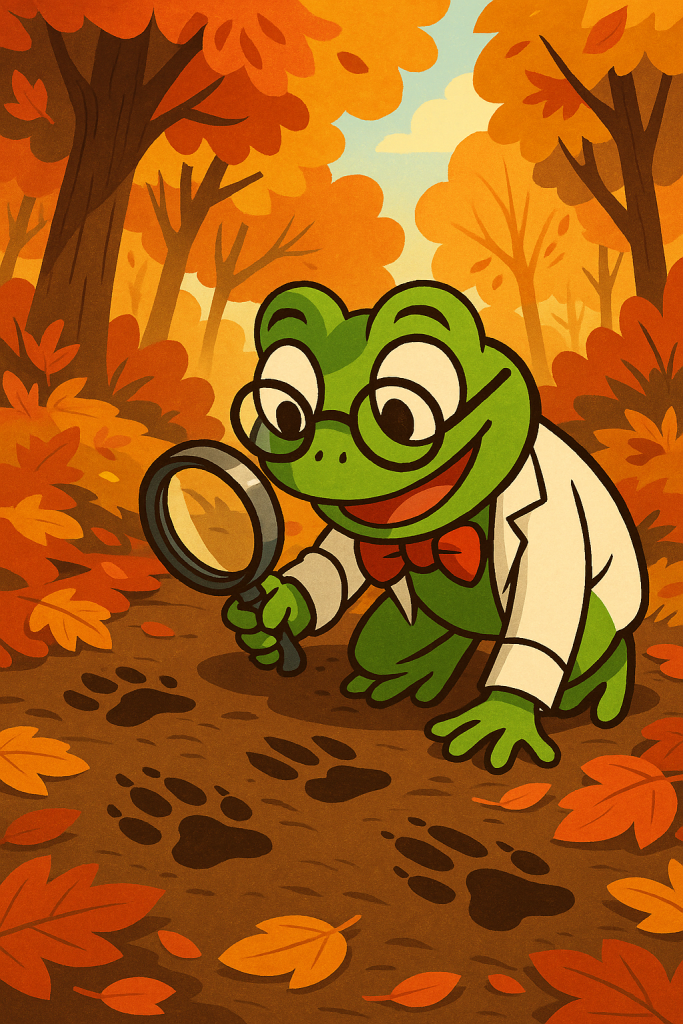
By Professor Bubbles — your frog scientist who loves muddy discoveries! 🐸👣
🍁 Autumn: The Best Season for Tracking
After it rains in autumn, the ground becomes soft, muddy, and perfect for something magical…
Animal footprints! 🐾
In forests, parks, and even backyards, you can spot clues left behind by animals — tiny marks that reveal where they walked, what they did, and sometimes even what they ate.
Let’s join Professor Bubbles as we learn how to read nature’s hidden clues!
👣 What Are Animal Tracks?
Animal tracks are the prints left behind when a creature walks through:
- Mud
- Sand
- Soft soil
- Snow
- Wet leaves
Each footprint is like a signature — unique to that animal.
By studying footprints, kids can become real wildlife detectives! 🕵️♂️🦊
“Every track tells a story. You just need to learn how to read it!”
— Professor Bubbles 🐸🔍
🐾 Common Autumn Footprints to Look For
🦊 Fox Tracks
- Oval shape
- Claw marks visible
- Front paw slightly bigger
Foxes often walk in straight lines to save energy.
🦔 Hedgehog Prints
- Tiny round marks
- Look like little dots in pairs
Hedgehogs wander around looking for insects before winter hibernation.
🐿️ Squirrel Tracks
- Two big back prints
- Two small front prints
- Often appear in “leap patterns”
Squirrels jump a lot while collecting nuts in autumn.
🦌 Deer Tracks
- Heart-shaped
- Pointed tips
Deer roam forests searching for food before cold weather begins.
🐸 Frog Tracks
- Long jumps
- Back feet wider than front
Perfect to spot near ponds and streams.
🧪 How to Track Animals Like a Scientist
Step 1: Choose the Right Time
Early morning after rain is best — mud captures footprints clearly.
Step 2: Walk Slowly
Scan the ground near:
- Puddles
- Forest paths
- Leaf piles
- Streams
Step 3: Observe Carefully
Look for:
- Track size
- Number of toes
- Claw marks
- Distance between footprints
Step 4: Use a Notebook
Draw the tracks or take pictures.
Compare them with online charts to identify the animal!
🌧️ Why Autumn Is Perfect for Footprints
Autumn weather brings:
- Soft soil
- Morning dew
- Mud
- Early frost
All of these create surfaces that hold tracks beautifully.
Plus, animals are extra active:
- Squirrels collecting nuts
- Birds searching for seeds
- Hedgehogs preparing for hibernation
- Foxes hunting more often
Nature is full of movement — and footprints!
🌍 What Footprints Can Tell You
A single track can tell you:
- What animal was there
- Which direction it was walking
- How fast it was moving
- Whether it was alone or in a group
- If it was eating, resting, or running
It’s like reading a story written on the ground!
🧠 Fun Facts from Professor Bubbles
🐾 Some animals walk in perfectly straight lines — especially foxes.
🐦 Bird tracks come in two shapes: “V” for walking or straight lines for hopping.
🌧️ Worms leave tiny squiggly trails after rain — those are tracks too!
🦌 Deer can jump over 2 meters high — sometimes you can follow tracks to spot their path over obstacles.
🧠 Science Vocabulary
| Word | Meaning |
|---|---|
| Track | A footprint left behind by an animal. |
| Stride | The distance between two footprints. |
| Trail | A series of tracks left as an animal moves. |
| Hibernation | A deep sleep some animals enter during winter. |
🧪 Try This Activity: “Make Your Own Footprint Cast!”
You’ll Need:
- A clear footprint (in mud or soft soil)
- Plaster of Paris (or flour & water backup)
- Water
- A cup
Steps:
- Find a good footprint.
- Mix your plaster with water until smooth.
- Pour it gently into the print.
- Wait 30 minutes.
- Lift out your footprint cast!
Now you have a real animal track to study at home.