

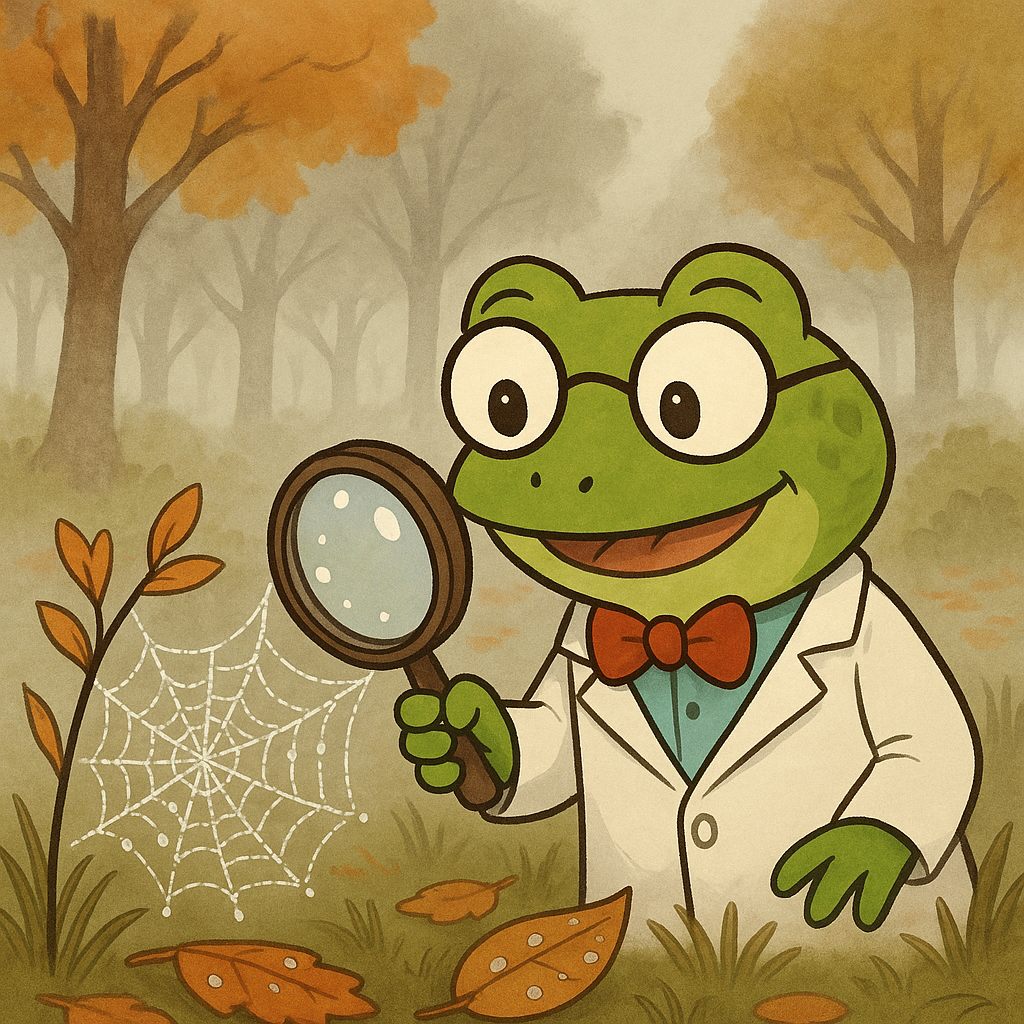
By Professor Bubbles, your frog scientist who loves foggy mornings and mysteries of the air! 🐸☁️
🌁 What Is Mist, Really?
Have you ever woken up on a chilly autumn morning and seen the world wrapped in a soft white blanket?
That’s mist — a type of cloud that comes down to visit the ground! 🌫️
Mist makes everything look mysterious: trees fade into the fog, spiderwebs sparkle with tiny drops of water, and the air feels cool and calm.
But what is mist, and how does it form? Let’s find out together!
💧 Mist Is Just a Cloud Close to You!
Mist and clouds are made of the same thing — tiny drops of water floating in the air. ☁️💧
Normally, clouds float high up in the sky. But sometimes, when the air near the ground gets cold enough, water vapor turns into droplets right where we are.
That’s when a cloud forms on the ground — and we call it mist or fog!
🌬️ How Does Mist Form?
Mist usually forms when:
- The air cools down quickly — often at night or early morning.
- There’s enough moisture in the air (after rain or near lakes and rivers).
- The air stays still, so the droplets don’t blow away.
When these three things happen, invisible water vapor condenses into millions of tiny droplets, creating that beautiful, dreamy fog we call mist.
Professor Bubbles says:
“Mist is like nature’s breath — you can see it when it’s cold!” 🐸💨
🌦️ Where Can You Find Mist?
Mist loves to appear in certain places, especially during autumn:
- 🌳 Forests and fields – where cool air gathers overnight.
- 🌊 Lakes and rivers – water adds moisture to the air.
- 🏞️ Valleys – where cold air gets trapped and forms fog.
- 🌅 Early mornings – before the Sun warms the air again.
By mid-morning, the mist usually disappears as the Sun shines and warms everything up. 🌞
🔬 The Science Behind Mist
Mist is an example of condensation — when warm air filled with water vapor cools down and changes into liquid droplets.
You can see the same process when:
- You breathe on a cold window — it fogs up!
- A glass of cold water gets tiny drops on the outside.
- You open a hot shower and the bathroom mirror fogs up.
It’s all condensation — the same science behind mist and clouds! 💧
🧪 Try This Mist Experiment at Home!
Let’s make our own mini mist cloud! ☁️
You’ll Need:
- A clear glass jar
- Hot water (ask an adult for help!)
- Ice cubes
- A small plate
Steps:
- Pour hot water into the jar until the bottom is covered.
- Place the plate with ice cubes on top of the jar.
- Watch closely! Tiny water droplets will appear — that’s mist forming inside!
What’s happening?
The warm air from the water rises and meets the cold air under the ice. The sudden temperature change makes the water vapor turn into tiny droplets — just like real mist outdoors!
🧠 Fun Facts from Professor Bubbles
🌫️ Mist is thinner than fog — if you can see more than 1 kilometer ahead, it’s mist!
🐸 Frogs love misty mornings because the air is humid and keeps their skin moist.
🌁 In San Francisco, fog is so famous it has a name — Karl the Fog!
🌈 When the Sun shines through mist, it can create a fogbow, a white rainbow made of water droplets!
📚 Science Vocabulary
| Word | Meaning |
|---|---|
| Condensation | When water vapor turns into liquid water droplets. |
| Vapor | Water in its gas form, invisible to the eye. |
| Humidity | The amount of moisture in the air. |
| Fogbow | A pale rainbow formed when sunlight passes through mist. |