

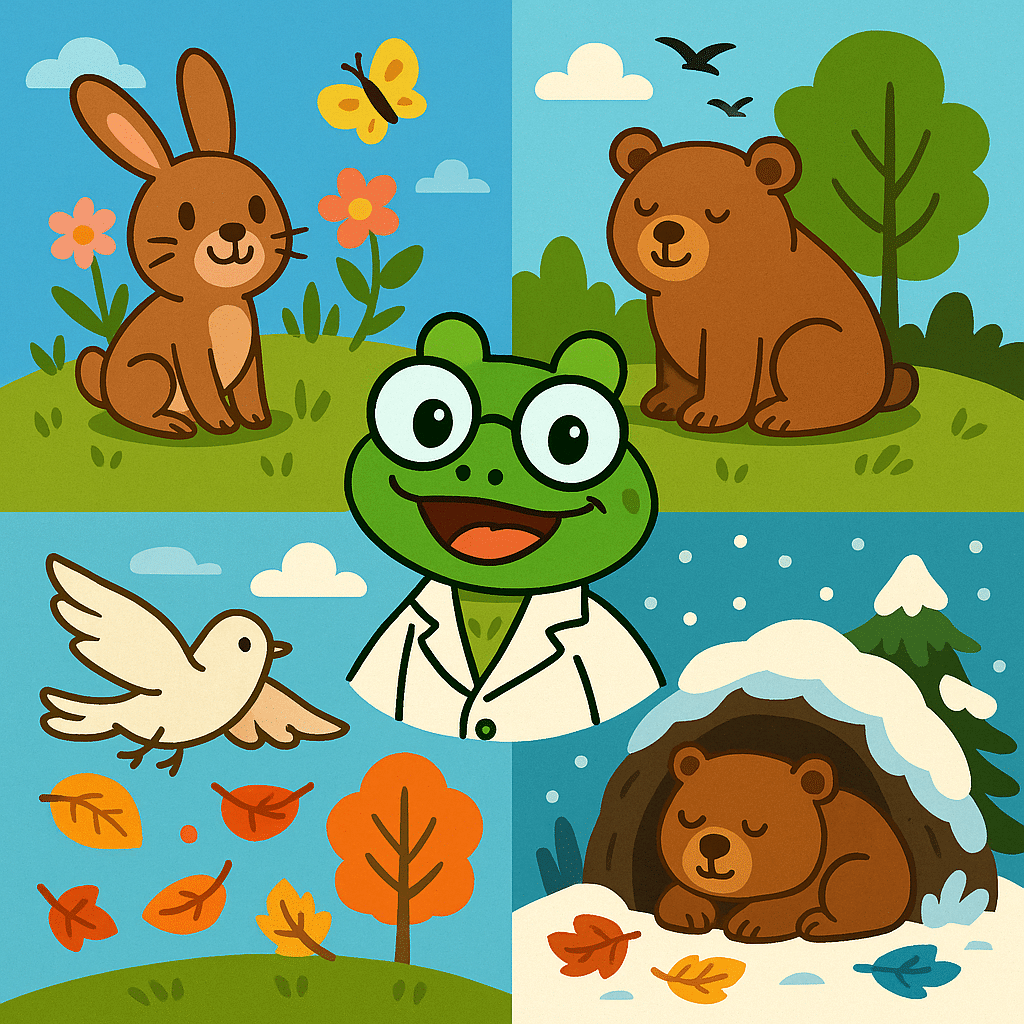
By Professor Bubbles, your frog scientist who loves every season! 🐸🍃
🌍 The Rhythm of Nature
Have you ever noticed how the world changes around you — flowers blooming, leaves falling, or snow covering the ground?
Those changes happen because of the four seasons: spring, summer, autumn, and winter.
Each season plays an important role in keeping nature balanced. The plants, animals, and even tiny insects all depend on the seasons to survive and thrive.
So, grab your magnifying glass and come along with Professor Bubbles to learn how the seasons keep the planet healthy and full of life! 🌎🔍
🌸 Spring: A Time for New Beginnings
After a long, quiet winter, spring arrives like a big “wake-up call” for nature!
The weather gets warmer, the snow melts, and the sun shines longer each day.
Plants start to grow again.
- Seeds that were sleeping in the soil begin to sprout. 🌱
- Trees grow new leaves.
- Flowers bloom and bring color back to the world. 🌷
Animals also get busy!
- Birds return from warmer places to build nests and lay eggs.
- Bees and butterflies start collecting nectar, helping with pollination — the process that helps plants make seeds and fruits.
- Frogs (like me!) come out of hibernation to find ponds and croak for their mates. 🐸🎵
Spring is all about new life. It’s nature’s way of starting fresh after a cold rest.
☀️ Summer: The Season of Energy
Summer is warm, bright, and full of action. ☀️
The long days and strong sunlight give plants energy through photosynthesis — the process that helps them make their own food using sunlight, water, and air.
In summer:
- Trees and plants grow fast and provide food and shade.
- Many animals raise their babies because food is easy to find.
- Insects like butterflies, ants, and bees are at their busiest.
For people, summer is great for exploring outside — but in nature, it’s the season of growth and abundance. Everything is active, colorful, and alive!
Professor Bubbles says:
“Summer is like nature’s big celebration — everything is moving, buzzing, and growing!” 🎉🌻
🍂 Autumn: Preparing for the Cold
As the days get shorter and cooler, plants and animals start preparing for winter.
Trees change color — their green leaves turn yellow, orange, and red before falling. 🍁
This happens because they stop making chlorophyll (the green pigment that helps with photosynthesis).
Animals begin to get ready, too:
- Squirrels collect nuts and seeds to store for later. 🐿️
- Birds travel thousands of miles south to find warmth — this is called migration.
- Bears and hedgehogs eat extra food to prepare for hibernation.
Autumn is nature’s way of saving energy. It’s like packing your backpack before a long trip — getting everything ready before winter arrives!
❄️ Winter: Rest and Renewal
Winter may seem quiet, but it’s one of the most important seasons of all.
When it’s cold, many animals hibernate — they sleep deeply to save energy until food returns in spring.
Other animals grow thick fur or feathers to stay warm.
Plants, too, take a rest. Trees lose their leaves to prevent water loss, and seeds stay safely in the ground waiting for warmer days.
Even though the world looks still, life continues underground and beneath the snow. Winter is the season of rest and recovery, allowing nature to prepare for a new cycle of life in spring. 🌨️🌱
🌈 Why All Seasons Matter
Each season has a special job to do:
| Season | What It Does | Example |
|---|---|---|
| Spring | Brings new life | Plants sprout and animals are born |
| Summer | Helps growth | Sunlight feeds plants and animals grow strong |
| Autumn | Prepares for rest | Trees drop leaves and animals store food |
| Winter | Allows rest | Nature sleeps and saves energy for spring |
Without the seasons, the Earth would lose its natural balance.
Animals wouldn’t know when to migrate, plants wouldn’t know when to grow, and the food chain would be broken.
The four seasons work together like a team, making sure that life keeps going in perfect harmony all year long. 🌎💚
🧠 Fun Facts from Professor Bubbles
🌻 The tilt of the Earth causes the seasons — not how close it is to the Sun!
🐻 Some bears can hibernate for up to 7 months!
🍂 A tree can lose thousands of leaves each autumn — but grows them all back in spring.
❄️ Snow acts like a blanket, keeping seeds and roots warm during winter.
📚 Science Vocabulary
| Word | Meaning |
|---|---|
| Hibernation | A deep sleep that helps animals survive the cold winter. |
| Migration | When animals move to a warmer or better place during certain seasons. |
| Photosynthesis | The process plants use to make food from sunlight, air, and water. |
| Pollination | How pollen is transferred from one flower to another to make seeds. |